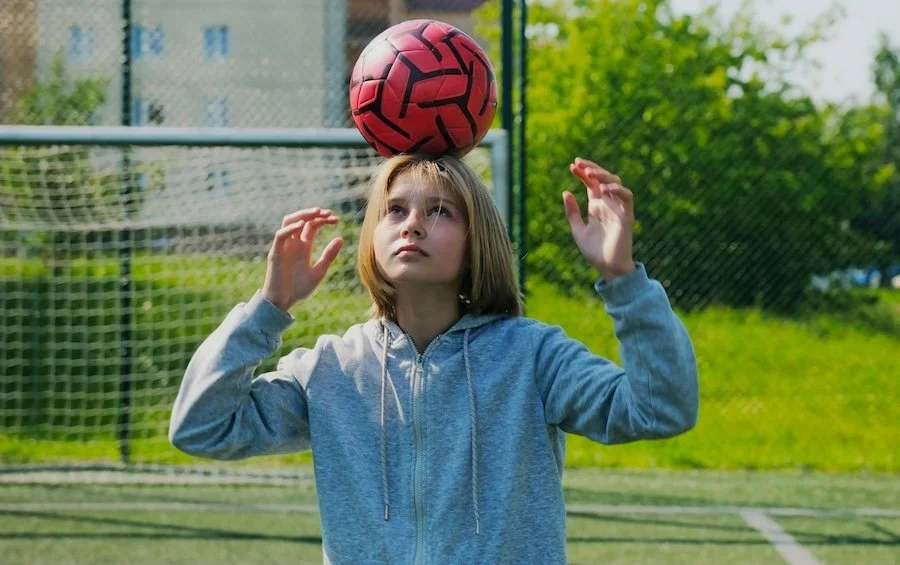
Composure,
Week 4
Players take their practice off the pitch to home and school, and adults get to reflect on their own composure.
This is the last week of Composure. The focus moves from building it to spotting it and helping kids transfer it to home and school.
It has only been a few weeks, so look for small, real changes, such as a player who used to argue with every decision staying steady through one.
The skill reaches well beyond football. School and home have their own pressure moments, and players can bring what they’ve practised on the pitch to those moments too. Much of it comes down to the energy a big moment brings. Players with composure still feel it, and they put it into what they do next, whether that’s the next tackle or the next question on an exam paper.
The adults around a player have a big say in whether Composure carries beyond football. Players learn as much from watching the adults around them as from anything they’re told. That’s why this week there’s some homework for you too, focused on your own composure, which you’ll find further down the page.
Keeping Your Own Head
All month, your players have been learning what gets to them and how to stay steady. This short tool takes you through the same steps from the touchline.
You’ll pick a moment that winds you up, notice what your body does first, and choose a word to go with one long breath out, so you have your own plan ready for match day. It takes a few minutes, and whatever you write stays private.
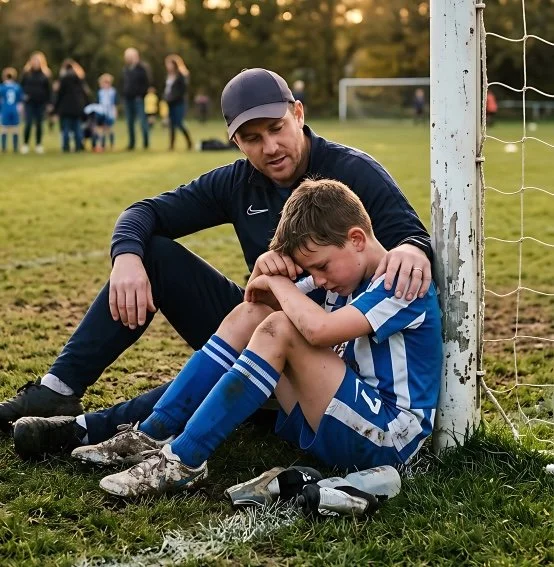
Coaching Strategies
Highlight growth and connect it to life beyond football.
Measure each player against where they were in Week 1, and keep comparisons between teammates out of it.
Ask players to look for moments at school or home that test them this week, like the minutes before a test or a falling-out with a sibling, and to use their Reset Word there too.
What to look for
Small, specific changes since Week 1, such as a player staying steady through a moment that would have set them off before.
Players who notice their own progress and others’.
Players who mention a moment at school or home where they stayed steady.
What to say
When a player stays steady: "A few weeks ago, that decision might have wound you up. Today you felt it, and you stayed in it."
When a player notices their own progress: "What did you do differently there?"
When you connect it to life: "That's the same thing you can use before a test at school."
How to respond
When a player stays steady, name exactly what they did and credit them for it.
When a player notices their progress or someone else’s, let them know you see it, too.
When a player mentions a moment at school or home, link it back to what they’ve practised on the pitch.
Drill Design
Ideas to Borrow
Rerun a drill from earlier in the month so players can see how they handle it now.
Let players volunteer for the big moment.
In the circle-up at the end, ask where else they’ve had a moment like that this week, at school or at home.
Drills that Suit
A short, high-intensity warm-up, such as a relay race.
A rerun of a game from earlier in the month, such as the Week 1 scoreboard game.
A sudden-death shootout or last-minute free kick in front of the whole squad, where players volunteer to take the deciding kick.
Sprint and finish, where players sprint a short distance and then shoot.
A high-intensity rondo straight after a sprint.
A 1v1 knockout, ending with a final in front of everyone where players volunteer to play.
On match day
Let the squad recognise the steadiest heads.
At the final whistle, ask the squad who kept their head when it counted and let them vote on the Steadiest of the Match. It goes to the players who stayed steady through a hard moment, and spotting steadiness in a teammate helps players recognise it in themselves. Then point to one specific change a player has made since week one, and connect it to life beyond football out loud.